

Overcoming the Top Pain Points Facing Today's Emergency Departments
A large Louisiana hospital’s emergency department was at a crossroads in 2022. Leadership changes shone a light on long-standing challenges at the level-1 trauma center. In particular, the facility was struggling with an overcrowded emergency department, where patients frequently filled hallways; high turnover among the nursing staff; lagging patient discharge times; issues with patient-experience scores; and a residency program with a low retention rate.
Everyone felt that the hospital needed a cultural renovation.
When the hospital’s leadership floated the idea of hiring a consulting firm to identify barriers and solutions, Dr. Mark Laperouse, the medical director of emergency services, offered a different idea. Doubling as the Chief Medical Officer at Professional Emergency Physician Associates (PEPA), which runs the emergency department at the Louisiana hospital, Laperouse had access to a vast network of experts in emergency medicine. That’s because PEPA is part of a national group partnership called Emergency Care Partners (ECP), which provides emergency physician practices with the resources needed to provide outstanding emergency patient care. ECP’s physician groups regularly discuss challenges and best practices and collaborate to improve emergency care nationwide.
Over the next two weeks, ECP colleagues from New York and Florida traveled to Louisiana, where they spent time observing and analyzing the processes in the emergency department, weighing in on what was and wasn’t working and how to make changes that would bring about the needed cultural renovation.
Challenges Facing the Hospital
- Overcrowded emergency department and lengthy holds
- Frustrated nursing staff, with high turnover
- Poor patient-experience scores, with Press Ganey scores in the single digits
- Discharge length of stay at an average of 300 minutes
- High resident turnover, with only 1 out of 12 residents opting to stay at the hospital
A Physician-to-Physician Partnership:
Empowering local physicians and strengthening local private practices
ECP was founded with the belief that quality healthcare depends on a strong local relationship between the hospital system and its physicians. Each of the organization’s physician practice groups maintains its own operational identity, local leadership and voice, along with its own branding, web design, bylaws, and more. Each group continues to benefit from ECP’s resources and support, which are designed to help them succeed and grow. Those areas of support include key support services, such as legal, accounting, compliance, and revenue cycle management, along with a proprietary platform for clinical data tracking and analytics that can be customized to an emergency department’s needs. And, of course, there’s the benefit of being a part of a broad network of emergency physicians eager to share their own expertise to improve patient care.
“They’re able to talk clinician to clinician, sharing best practices and protocols in a collegial way,” said David Copple, chief commercial officer with ECP. “That’s different than the top-down approach, with a nonclinical leader of a company telling the physicians what they need to do in a clinical setting.”
That meant that when the Louisiana-based hospital needed external opinions on emergency department efficiency, colleagues from the New York-based physician group, Progressive Emergency Physicians (PEP) — Andrew Sama, MD, FACEP, Executive Vice President at ECP and president at PEP; Charlie Occhipinti, Chief Operating Officer at PEP; and Chris Raio, MD, MBA, FACEP and FAIUM — were ready to help.

Sama, who manages PEP’s relationship with four Long Island-based emergency departments, has more than 40 years of medical, operational, and business experience to draw from and, like other physician partners with ECP, can weigh in on nearly any challenge an emergency department is facing.
“Having done this in multiple states over many years, it gives you enough expertise to be able to walk through a department, speak to the patients, the nurses, the support staff, and the physician staff, and then make some direct observations,” Sama said.
Like many of his physician colleagues, Sama is a partner and physician owner of ECP, so he has a vested interest in helping to improve all hospital facilities in the collective partnership. “When we add value to the operations at an individual site, it collectively enhances the value of our organization, both from a reputation perspective, an operational perspective, and a financial perspective,” he said.
Benefits of ECP
As a part of ECP, local and regional groups maintain their branding and clinical autonomy while benefiting from the organization’s back-office infrastructure, which includes support for:
- Revenue cycyle management
- Financial reporting
- Operational Reporting
- RCM support
- Clinical recruiting
- Educational training
- Compliance
- Contracting
- Scheduling
- Payroll
- Marketing
- Additional service line development
- Data tracking and analytics
The Cultural Renovation Unfolds
When the PEP and ECP teams traveled to Louisiana, they observed every aspect of the emergency department and interviewed nurses, physicians, residents, advanced practice providers, and hospital leadership.
The result was a comprehensive review, including analysis and recommendations. The 20-page report, a collaboration between PEP and PEPA, included more than a dozen recommendations for operational change, strategic staffing reallocations, and performance-improvement initiatives in patient throughput and observation services. It also detailed actionable advice on how to implement the recommended changes with minimal capital expenditure. The report was then presented to the hospital’s administrative team.
“When you are the boots-on-the-ground guy that has all the ideas and energy and recommendations, at some point people stop listening, people question the intent,” Laperouse said. “When you have a fresh perspective, and somebody else is saying it who’s not internal, it’s less abrasive.”
With the administrative team’s approval, Laperouse and his team incorporated the report recommendations into the medical center’s strategic plan. They devised workflows that eliminated care-team redundancies, took steps to improve staff morale and retention, and made important changes that increased patient satisfaction.
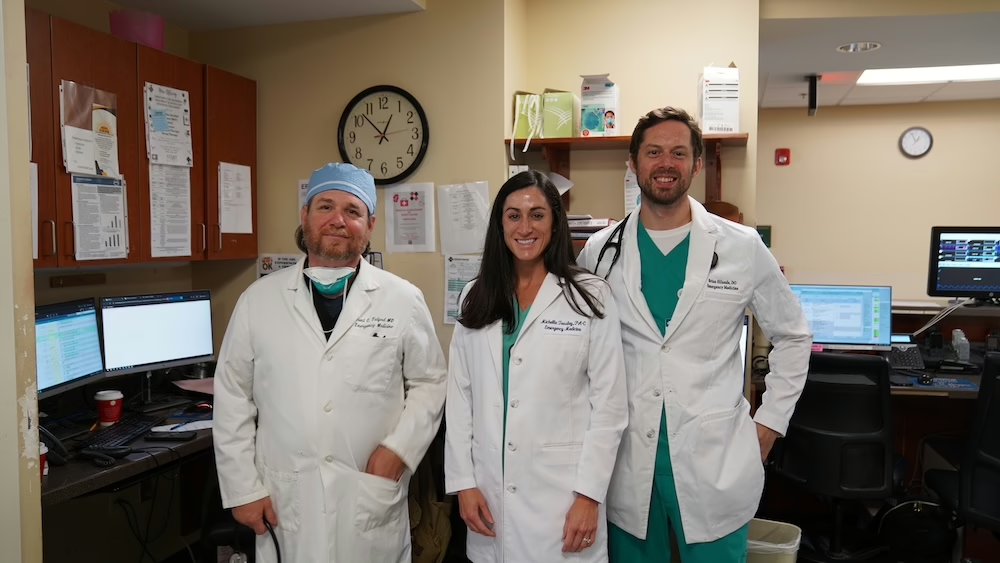
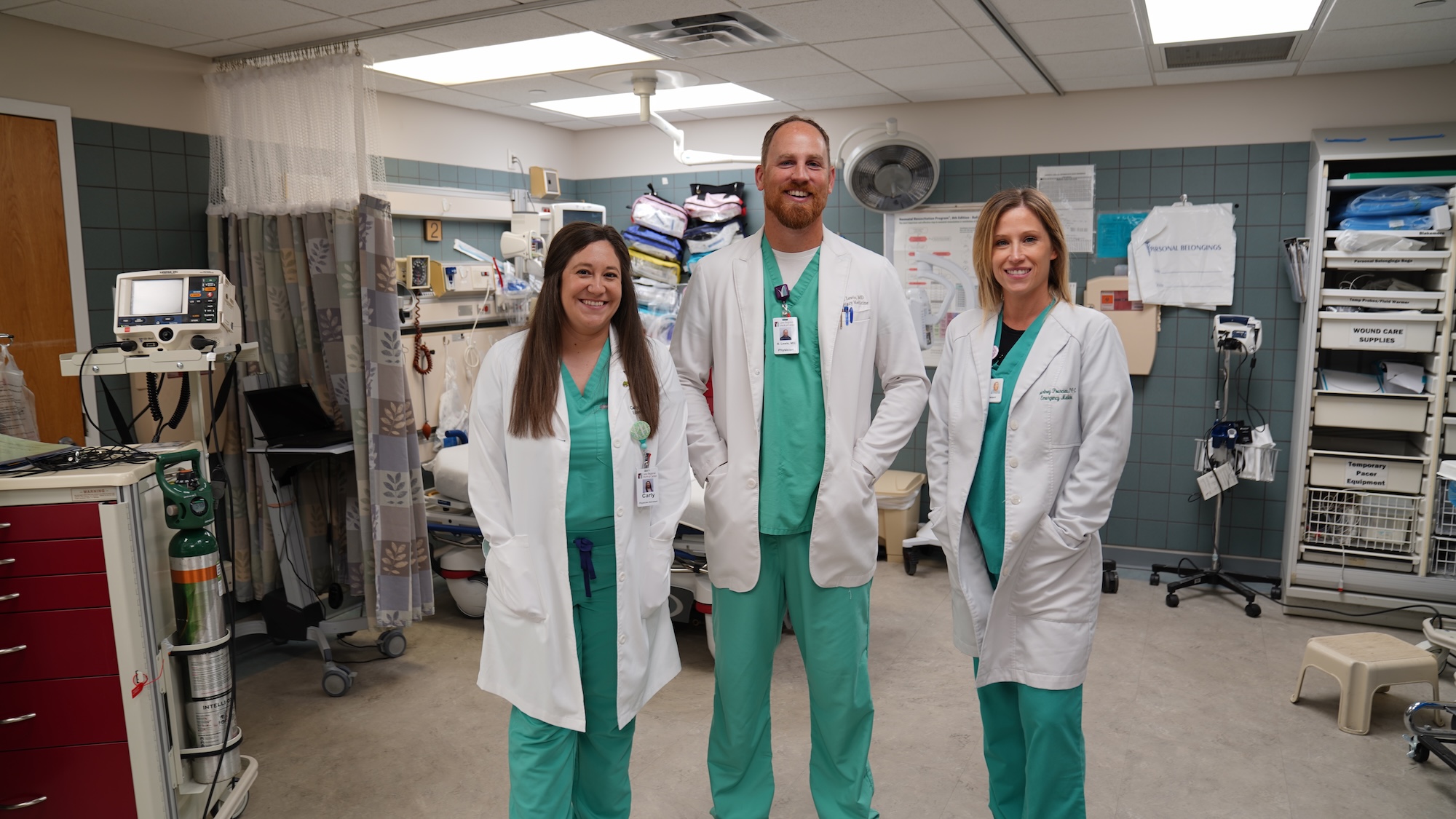
When you have a fresh perspective, and somebody else is saying it who’s not internal, it’s less abrasive.” – Dr. Mark Laperouse, Medical Director of Emergency Services
Snapshot of a Cultural Renovation in Louisiana
To improve care, the emergency department had to scrutinize what was working and what wasn’t before leaders could start to rebuild its processes. Some of the steps taken included:
- Embracing a collaborative, multidisciplinary approach to emergency department leadership that included improved communications with EMS and routine meetings with medical staff in every line of service.
- Staffing changes that included separating advanced practice provider (APP) staff from medical doctors so that they can see patients independently, establishing triage areas for patients to be seen by APP staff, and designating an MD-only area for high-acuity-level patients.
- Communicating the importance of leadership through ownership, with emergency department (ED) leaders accepting responsibility for past challenges.
- Nursing and ED collaboration, where nurses round with the ED physician and use ECP/PEPA’s clinical data and analytics.
ECP built a customized analytics platform that used real-time data to identify bottlenecks and guide decisions related to clinical operations and patient throughput, demonstrating the opportunity for change.
The key was analyzing everything, even at the most basic level, to determine where improvements could be made to provide a more efficient and consistent patient experience, drive the quality of service and improve outcomes. Every patient encounter should be thought of as multiple time stamps: check-in to triage, to first provider, to first order, to orders completed, to discharge. The hospital needed to break down every single time stamp and identify which ones were worth looking into, which ones needed to be adjusted and with which they were satisfied.
“We fixed the culture, we made some adjustments with pay, and when all the residents signed with us and not with any of the other outside groups, we turned some heads.” – Dr. Mark Laperouse, Medical Director of Emergency Services
Building a Better Emergency Department
The cultural renovation continued more than a year after the changes were initiated in October 2023. Overall, staff turnover has been significantly reduced, and nursing turnover has reached an all-time low for the hospital. The emergency department has become markedly more efficient, and patient satisfaction scores have increased dramatically.
Thanks to workflow adjustments, the average discharge length of stay for patients dropped by nearly 100 minutes, allowing care teams to see more patients. Because patients were attended to more quickly, EMS was able to bring in more patients, sometimes reaching more than 100 per day, compared to 60 to 70 in previous years.
The residency program has also seen improvements. In the past, only 1 in 12 residents accepted a position at the hospital post-residency. In June 2024, 6 of the 12 residents accepted a position to work at the hospital through PEPA. The other six residents opted to leave the state of Louisiana altogether. “That was a pretty big deal,” Laperouse said. “We fixed the culture, we made some adjustments with pay, and when all the residents signed with us and not with any of the other outside groups, we turned some heads.”
The emergency department has already seen greater satisfaction among employees and patients. Through it all, they are grateful to be surrounded by colleagues at ECP who understand and support the local mission of the hospital and who’ve provided resources and guidance to help do the work at hand.
“If it were just this group at this hospital, it would be a small business without all the resources [of ECP]. I would have to be the HR expert. I’d have to be the legal expert. I’d have to be the CEO, the CFO, the COO,” Laperouse said. “But together, we are bearing the responsibility of this business. We are strengthened by our numbers.”
Like PEPA, every physician practice that makes up ECP has a strong local relationship with its community and each other, managing all day-to-day clinical aspects of the group. Each practice also benefits from the support of a larger company filled with strong leaders determined to help its physician partners succeed, whether that means sharing data and best practices or acting as consultants — and colleagues — to assess and improve the way emergency departments function in other markets.
For ECP’s physician partners, there’s great
satisfaction in setting up the emergency department team for success so that they can provide the best possible care to their patients.
Results After ECP Consultation
- The average discharge length of stay for patients fell by nearly 100 minutes
- Patient experience/satisfaction improved
- Employee turnover decreased
- EMS sometimes brings in 100 patients per day, compared with 60 to 70 in years prior
- Increased emergency medical services (EMS) volume by more than 2,000 patients year over year
- Retained all residents from the residency program who wanted to stay in Louisiana and accepted jobs with PEPA
- Home
- Our Partners
- Canyon State Emergency Partners
- Eastern Carolina Emergency Physicians
- EMpower Emergency Physicians
- Franciscan Emergency Physicians
- Illinois Emergency Medicine Specialists
- Integrated Emergency Medicine Partners
- Lake Emergency Partners
- Missouri Physician Partners
- Ohio Emergency Medicine Services
- Professional Emergency Medicine Management
- Professional Emergency Physician Associates
- Progressive Emergency Physicians
- Clinical Careers
- Lead Pass Program
- Contact Us
- Privacy Policy